
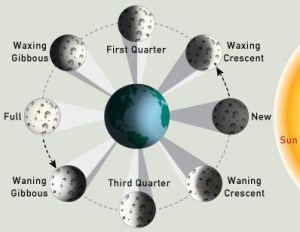
This past Saturday, September 22, 2018, the autumnal equinox occurred at 9:54 p.m. As I understand it, at that moment the sun’s position in relationship to earth resulted in equal hours of day and night. The orbit of the earth around the sun predicts this reliable occurrence twice a year. After the fall equinox, days gradually shorten, as nights lengthen until we reach the winter solstice, when the pattern reverses. Days gradually lengthen again heading toward the vernal equinox. And so on, year after year after year until who knows? On the equinoxes I sense the balance and feel comforted. I love nature’s dependable pattern. I wondered whether the equinox might hold secrets to comprehending life.
Yin and Yang
 I suspect the security I get from the balance of night and day reflects the Chinese philosophy of Yin and Yang. In the symbol, Yin is represented by black, Yang by white. Yin lies in the shade, Yang in the sun. Because the St. Lawrence River is so integral to our family’s lives, I especially connect with the idea that Yin represents the south bank of a river, Yang the north bank. Within each is a small circle, a seed, of the opposite. According to myth, as the sun gradually moves across the sky, Yin is revealed in light, Yang is shadowed. In this way the sun reveals what was concealed and obscures what was formerly exposed. Like the equinox, change and reorder repeat. It’s comforting to think that I will eventually understand the meaning of events from the dark parts of life. Plus, Yin and Yang represent opposite or contrary forces that may actually be interconnected. I suppose that explains why I am always searching for the positive in adversity. Maybe we see evidence of those opposing forces when a child’s birth occurs near a loved one’s death; or
for example, my mom’s death on my dad’s birthday.
Halves

On the equinox a day becomes equally divided into halves of dark and light. I considered at length the concept of halves. I found plenty of negativity in the language: half-baked, half-breed, half-cooked, half-empty, half-hearted, half-pint, half-starved, half-truth, and half-wit. With uncharacteristic pessimism I had to admit that I passed life’s half-way point a while ago. If today were half-way, I would live to be 130 years old. None of us has any idea when life’s half-way point occurs. If we did I doubt we would see life as half-begun rather than half-over. Even so, in the cliché I see the glass as half-full. With fewer years ahead than behind, I feel the need to find a seed of positive.
When financial planners attempt to explain retirement, they use perfectly rounded hypothetical numbers, easy to calculate. For the sake of examining my life by halves, I am choosing 100 years as my hypothetical life span. (Yes, that is exactly why I am accused of having rose-colored glasses.) Using 100 as my life’s target, it’s simple to identify the half-way point. On my 50th birthday I sat in one of my Saturday doctoral classes at Indiana University of Pennsylvania, on track to achieve one of my life’s goals. I could not have choreographed a more fulfilling life equinox.
Using a mathematical approach, I can re-calibrate my remaining 35 years into halves of positivism. I took another look back, and identified the year I would say I became an autonomous, independent adult: 1985, age 32. I used that age, subtracted it from 100, divided by two. Added the quotient of 34 to 32. According to my calculations, as a self-directed adult, I will just be hitting my half-way point at age 66. Next, I took my retirement age, 62, subtracted that from 100, divided by two, and figured I still have 16 years left before I reach the half-way point in my writing career. So now I have learned the physics of half-lives and I intend to apply those ad infinitum.
A Turning Point

The Equinox marks the change in seasons, at least by our calendar. In northern New York we know a turning point in the weather will soon follow: the first frost or the first snow. This week’s essay becomes number 27 of 52, the first past the mid-point, one that feels like a turning point. To me reaching a half-way mark offers assurance that a destination will be reached, a goal accomplished, a project completed. Of course in life, I am in no rush to make it to the final conclusion. Yet I have defined 65 as a turning point. Because what follows must surpass what I have already done. Reed referred to this recently in his own striving toward goals, “Raising the bar.” As the weeks diminish toward the conclusion of my year’s commitment, I expect new possibilities to arise; an advance and retreat, forces that complement, Yin and Yang. I will discover a new set of projects, a fresh time-line, a recalculated half-life, my familiar cycle.
Today is the equinox of PowerAgers, the half-way spot. I can relax a little, relish the balance. Many years ago, my friend, Edana, and I each wrote a list of life goals. A few years later, surprised that I had mastered the list, I composed a new one. Having a fresh list of unfinished pursuits gives me the illusion that I am perpetually in the first half of life. I already feel the exhilaration of new challenges.



 Find the contentment that comes from circling the hive repeatedly?
 Cars accelerate and reverse in haphazard fashion; the sole purpose to ram one another?

 dry sink. Old wooden blocks, vintage wicker doll furniture and various sets of porcelain toy tea sets assemble on miniature chests. Pristine walnut or cherry cupboards house tin toys, rare pottery, and old-fashioned household utensils.
 On the walls a Red Cross nurse beseeches volunteers; a young lady in a 1912 sapphire gown and wide brimmed hat attests to Mecca cigarettes. Pictures of plump children with golden ringlets hang in every room. Two-dozen gilt-trimmed commemorative calendar plates form a constellation behind the royal blue damask sofa. The flavor of the past even touches the utilitarian rooms. In the bathroom delicately-beaded, fringed purses hang like mosaics from pegs. Above the kitchen cabinets blue-embellished gray crocks stand equidistant apart, still proud of their long forgotten purpose.
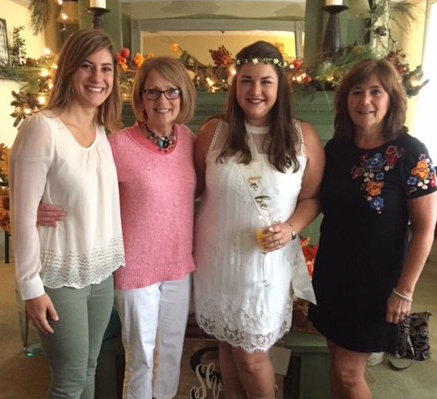
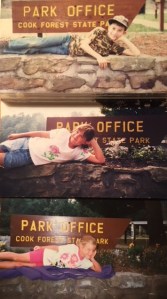 decorations for Stevie’s bridal shower, the reason for my visit. We girls drank wine and Dad had vodka. Holly laid out a design to be painted on reclaimed window glass. Stevie embellished bouquets for her October wedding with pine cones she had collected from Cook Forest. I suspect the pine cones served as the first trigger to my mom’s absence. My mom loved Cook Forest, and she and my dad had taken all the grandchildren camping there. Stevie, especially, carried on the tradition. The hot, humid pattern of late summer persisted, exactly as it had the night my mom died. Stevie voiced our thoughts, “This feels like the night we put things together for grandma’s memorial.” I swallowed hard, suppressing tears.
 By the day of the shower a cold front had arrived bringing steady rain. I’ve always noticed how a drastic change in weather affects temperament, elevating or discouraging, depending on what mood came before, rather than what conditions. Our luncheon with Stevie’s friends and family unfurled with merriment. Bottomless mimosa’s lubricated optimism. We anticipated Stevie’s married life, and temporarily forgot the looming anniversary. Tami and I reunited with our pseudo-sister, Judy, the proprietor and chef of Amazing Foods. Judy has fed us on other happy occasions. But, the last event Judy catered for us was Mom’s memorial.








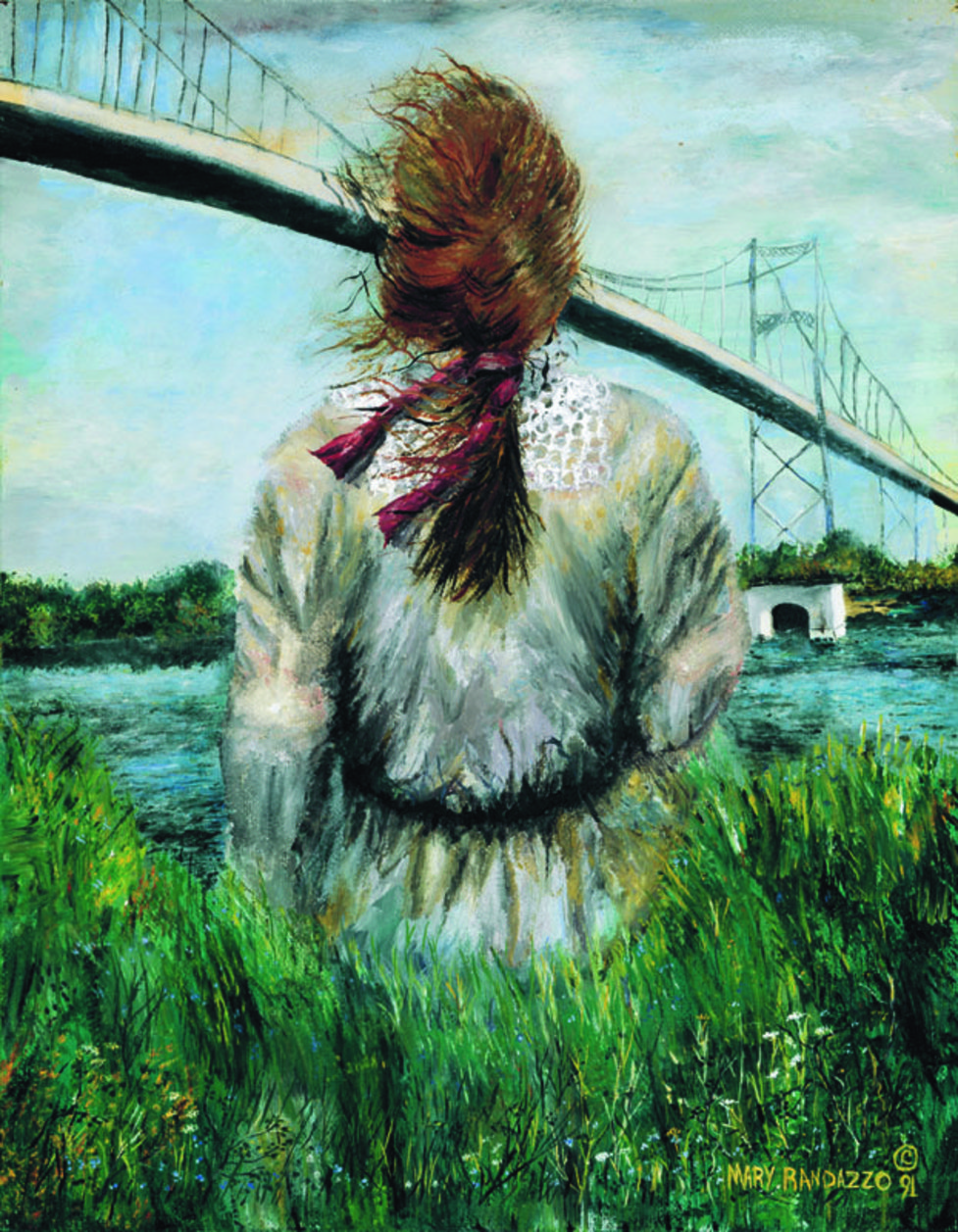


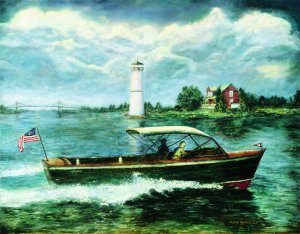

 Eight months later we bought a house. When my sister came to visit I showed her the wine labels and told her I intended to meet the artist. Tami couldn’t wait for that to happen. I took my visiting friends to the Coyote Moon Winery and they enjoyed the wine and admired the labels. Cathy
 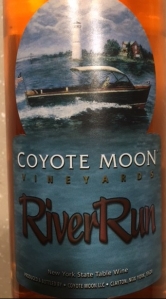 checked out the winery website and read that each label had a story. I hadn’t yet met Mary Randazzo, so I resisted announcing that by their next visit we just might be drinking wine in her studio.
 praised her, “She had the ability to make those around her feel loved, supported, and important; because of that people were drawn to her.” And to confirm my own intuition, “Mary made every person who met her feel like her new closest friend.” She had a favorite tree that she intended to paint, but it was cut down before she had a chance to paint it. Years ago I had the very same experience with a gnarly old tree by Twin Bridges. Like Mary, it fell before I had the chance to befriend it.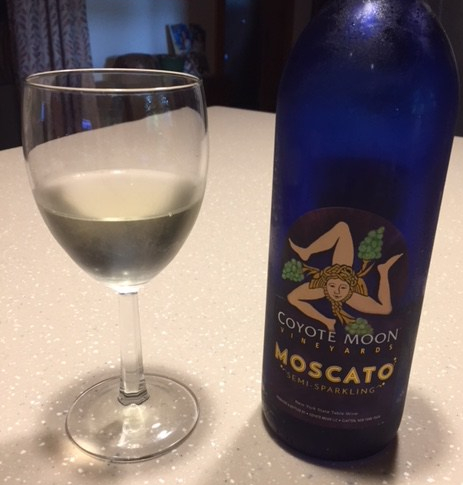


 gals who had traveled with us to New York City. We two had visited the Metropolitan Museum of Art and planned to meet the others for dinner. When we found ourselves too many blocks away to coordinate, Edana guided us to an intimate restaurant: Rotisserie Georgette. Once situated in our booth amid the succulent aroma of roasted chicken, Edana momentarily left to use the restroom. I perused the menu. The hostess guided a couple into a nearby booth. Flabbergasted, I found Sally Field in my direct line of vision.
 Last week Edana sent me a message lamenting the fact that I would not be in Nashville to hear Sally Field give a book talk on her recently published memoir, In Pieces. Edana’s message went something like this, “Darn, I wish you could go with me to this.” I made one quick query to Paul regarding the muskie-fishing schedule and replied, “Why can’t I?” Tickets purchased, plane flight reserved. I know how fortunate I am to have the time, the resources and the opportunity to orchestrate this visit.


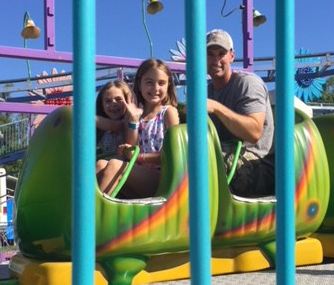
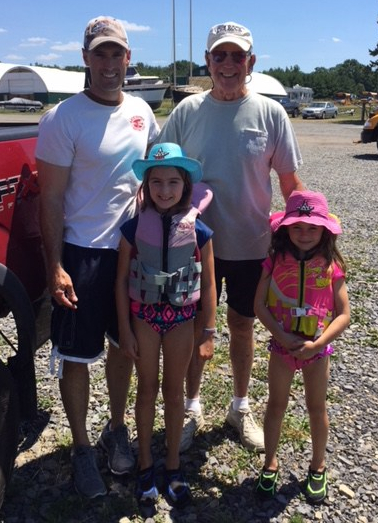 We sped out to the Canadian Narrows of the St. Lawrence River where Reed inflated the yellow vinyl raft intended for two riders. We had the ideal postcard day for Reed to take us in his Lund boat for tubing and swimming. This would be a chance for my dad, visiting from Pennsylvania, to enjoy time on the river with his grandson and great-granddaughters. Into boat corners we wedged coolers, towels, masks, and snorkels. Rayna immediately informed us that she did not intend to ride the raft. She had tried it once, and the bumpy rough ride exceeded her comfort zone. Ditto, I thought. However, no way could Paul balance a raft with Britt who weighed just 40 pounds. My dad, nearly age 88, probably would have volunteered if we let him, but that seemed irresponsible. Reed needed to drive the boat. By this time Britt, almost six, had nimbly hopped into one side of the raft and patiently waited for a partner. All eyes turned to me.
 awkwardly climbing, then tumbling, into the seat of the two-person raft. “Go fast! Go fast!” Britt shouted as Reed let out the tow rope attached from the boat to the banana-colored craft. I never intended to sit on a tube behind a speed boat. I hate thrill rides of any kind. We started off easy, our bottom dragging in the water. With acceleration the raft leveled off and skimmed the top of the wake, crystal water droplets spraying in all directions. Britt shrieked and laughed, enjoying every bump and air pocket. I tucked my hat under my legs and held on for dear life. My lips formed a fake smile, but I screamed authentically. The three guys and Rayna just grinned and waved, dry in the boat.
 Reed kept the motor off; the boat floated slowly down the river. Paul would keep an eye on the depth as Reed and the girls swam. My dad simply enjoyed watching the girls bob and float around in the water. Reed fitted the girls with their masks and snorkels to view the river bottom. If I jumped into the river each girl would have a partner. I tried to slip off the stern ladder as slowly as possible, but when I let go I submerged completely before popping up again. By this time I had not a single qualm about the hair.
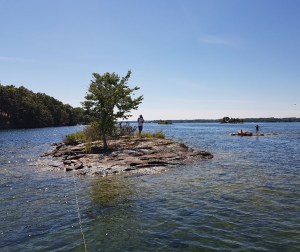 kindling for our imaginary blaze. I was Tom Hanks from Cast Away. Every now and then a passing boat sent waves crashing onto our island. Rayna discovered mussel shells under rocks and collected about three dozen. We had to use Paul’s hat to carry them to the boat. In a few hours we flew back to the marina, my hair pouffing in the wind. We returned home just in time for bed. Tomorrow’s plan: repeat today, except after swimming we would troll for muskies.


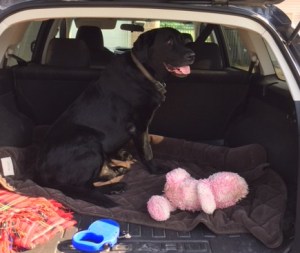 Wiley, who is actually the son of our dog, Musky, visits me this weekend. The girls took a trip to their other grandparents and the guys went muskie-fishing down river. So Wiley and I have quality time together. He wags his tail furiously when I tell him how much fun we will have. I line the back of the Subaru with his quilted Orvis bed, toss in his favorite fluffy toy, and place his laminated immunization card on the dash with my passport. We clear customs with no problem.
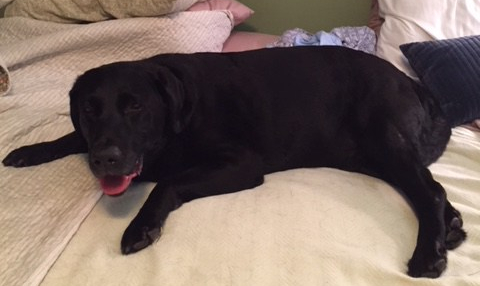 place his bed on the floor next to mine. I climb in and Wiley lifts his front paws onto the mattress. He wants to sleep under the fan as well. I get up and boost his thick back-end onto the high mattress. I feel the endorphins release, like old times.
 I wake suddenly to wild barking. The clock reads 12:00. A motor vrooms past the window, heading down Sunset Drive. Wiley hears no traffic at his own house, so he’s in defense mode. I soothe him and we fall back asleep. At 1:30 a.m. the same rumbling motor passes again, heading the opposite direction. Wiley erupts, but never leaves bed. At 5:00 a.m. he stands, jumps off the bed and runs woofing to the sliding door. Barely visible through the trees, a greens-mower does circles on number one. I pull on clothes for our morning walk. Thanks to Wiley, I’ll see the morning unfold.
 house. He doesn’t mind it one bit and charges ahead on the trail, his Schwarzenegger-neck towing me like a water skier. Fortunately, I wore tennis shoes rather than flip-flops. I do a power walk to keep pace. We have half-a-dozen dog neighbors who do regular strolls on the roads and paths, so odors are abundant. He dashes ahead, suddenly switches back and charges into the brush after a squirrel. My arm jerks 180 degrees front to back. How did I forget the nimble footwork of Labs?


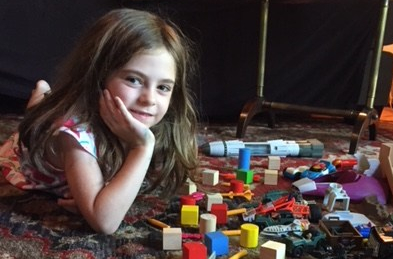
 As the evil-team coordinator, I must build my own base. With remnants of the colored blocks from my own childhood, two different sizes of alphabet cubes, and newer wooden Melissa & Doug blocks, I construct a headquarters, a weapons depot, and a spacious jail. Britt designated which characters would be my evil cadre. The chain of command works as follows. Penguin is the boss-bully. Just under him are a couple of narcissistic shrewd superheroes. Next in rank, those with brute physical power: two wrestlers and Chuck Norris. Three finger-puppets serve as the lookouts. Don’t miss the irony. Britt’s innate sense of gang power-structure is spot on. I catch myself drawing frightening parallels to reality.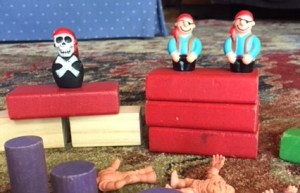
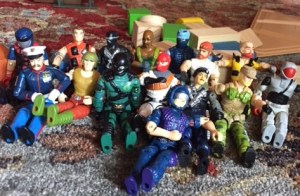 Representatives from many different factions comprise the good-team forces. G.I. Joes, the “Real American Heroes,” dominate Britt’s good-team. After all, in the cartoon version they followed the principles of fighting for freedom, never giving up, and always being there to defend our country. W.W. II propaganda had nothing over the 80s. Unlike reality, no characters seemed to be hurt in the animated series. At the conclusion of each episode the viewers were provided some kind of life lesson and the adage, “Now you know and knowing is half the battle.”
 as M.A.S.K (Mobile Armored Strike Kommand) supports the good-team, as well. M.A.S.K., another animated series from the 80s, portrayed ordinary men and vehicles transforming into an extraordinary team to battle V.E.N.O.M. Illusion was the ultimate weapon. In reality, every generation has its own nemesis, a Vicious Evil Network of Mayhem, I just hope ours is no closer to home than North Korea.
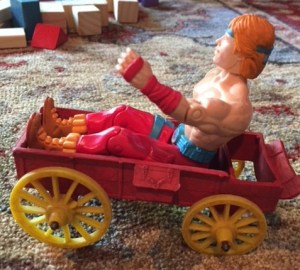 Britt tells me I’ve acquired fakes. And the only prisoners I am able to take are the smallest Muscle-Men. Even then, as soon as my people close the jail door, Wonder Woman swoops in and frees them. In every battle and scenario the good-team wins with more troops, more weapons, advanced technology and power.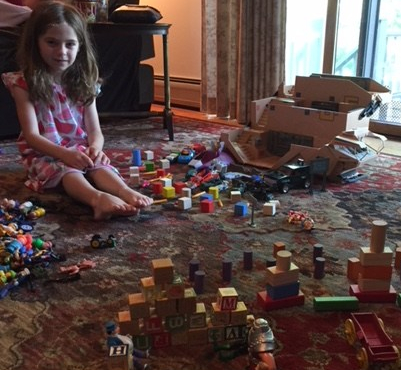

 PowerAgers